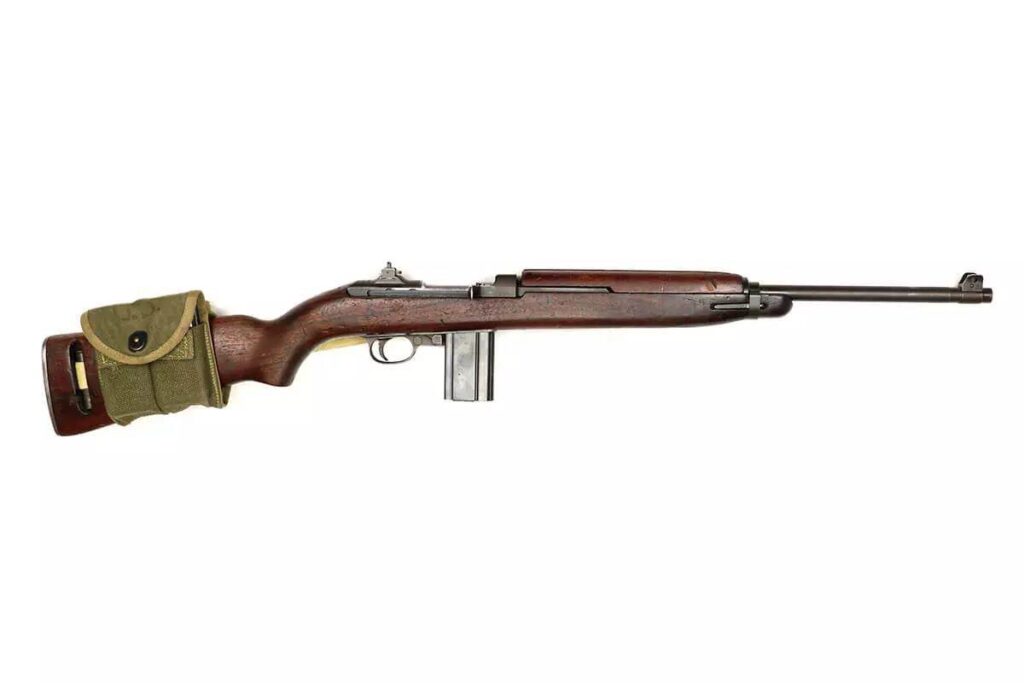
The M1 Carbine is a lightweight American semi-automatic rifle chambered in .30 Carbine, adopted in 1941 and produced in the millions by ten prime contractors during World War II. Light, handy, and reliable, it served in WWII, Korea, and beyond, and remains one of the most collectible US martial arms.

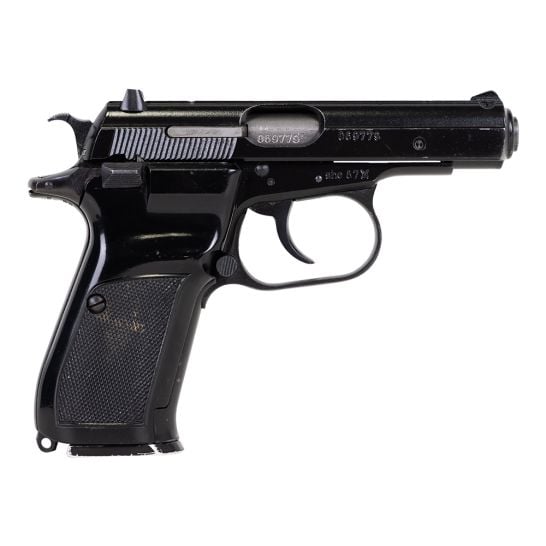
The CZ82 is a Czechoslovakian military service pistol chambered in 9×18mm Makarov, adopted in 1982 as the standard sidearm of the Czechoslovak armed forces. A compact, double-action blowback design with a high-capacity 12-round magazine, ambidextrous controls, and a polygonally rifled barrel, its commercial twin is the CZ83.

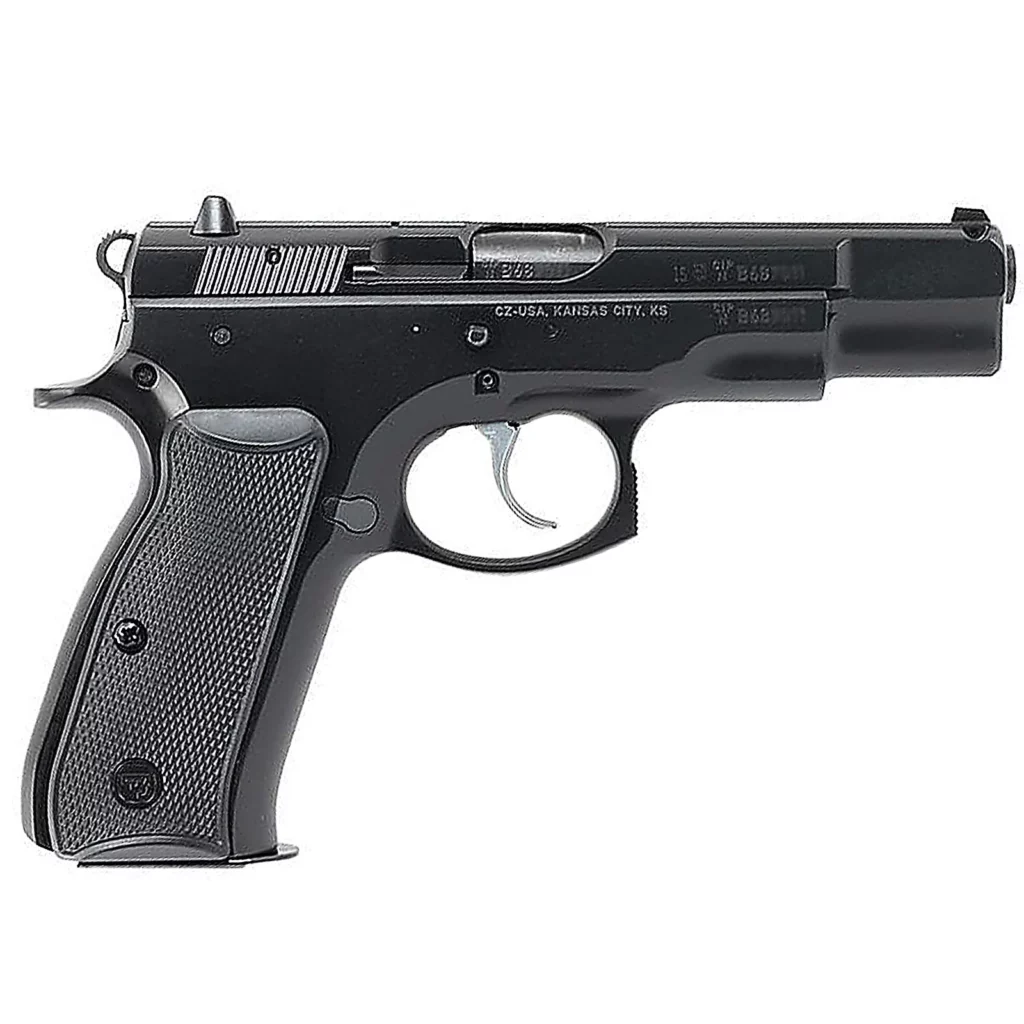
The CZ75 is a Czechoslovakian semi-automatic pistol chambered in 9mm Luger, introduced in 1975 and regarded as one of the finest service pistol designs ever made. Known for its ergonomics, high-capacity magazine, and slide-inside-frame rails, it spawned the decocker-equipped CZ75 BD and the ambidextrous CZ85.

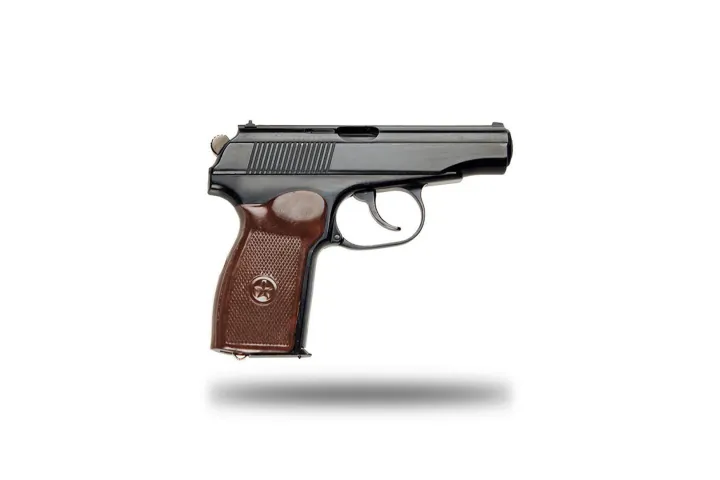
The Makarov PM is a compact Soviet semi-automatic pistol chambered in 9×18mm Makarov, adopted in 1951 as the standard Soviet and Warsaw Pact sidearm. A simple, durable blowback design, it was produced across the Eastern Bloc, with Bulgarian “Circle 10” examples especially well regarded by collectors.

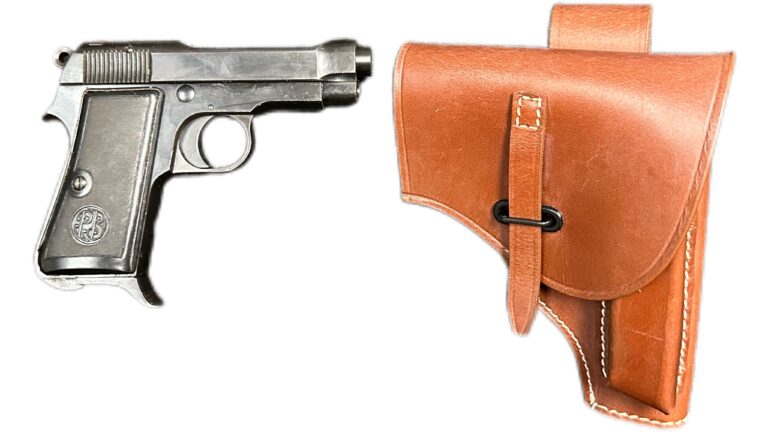
The Beretta M1934 is a compact Italian semi-automatic pistol chambered in .380 ACP, adopted as the standard Italian military sidearm in 1934. An all-steel blowback design known for durability and simplicity, it served through World War II. Its near-identical sibling, the M1935, is chambered in .32 ACP.

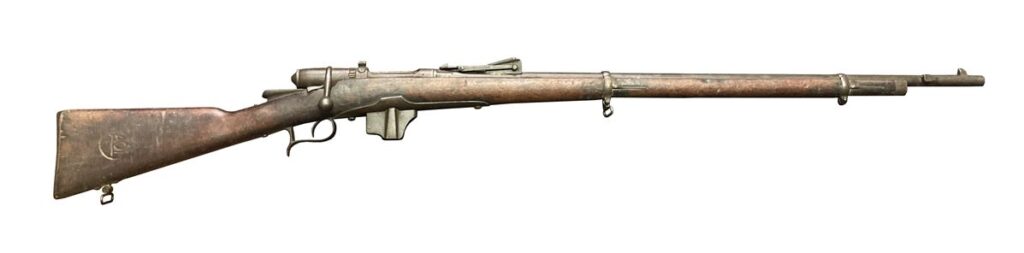
The Italian Vetterli is a family of 19th-century service rifles beginning with the single-shot Model 1870 in 10.4×47R, later upgraded with the Vitali box magazine as the 1870/87, and in some cases converted during WWI to 6.5 Carcano as the 1870/87/15. The 6.5 conversions are widely considered unsafe to fire.

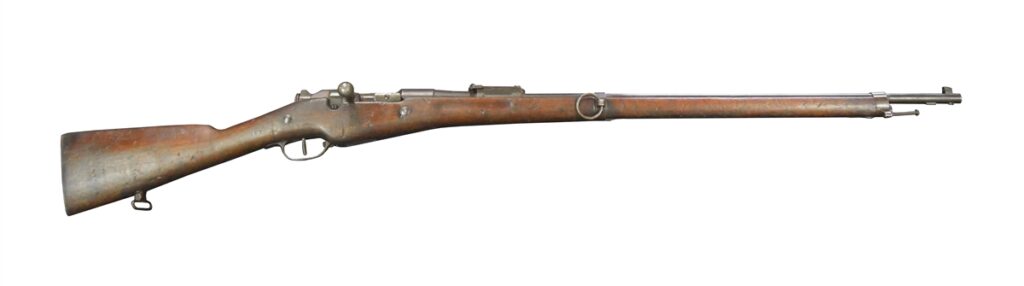
The Berthier is a family of French bolt-action service rifles and carbines chambered in 8mm Lebel, adopted from 1890 onward to supplement the Lebel. Feeding from a faster en-bloc clip instead of the Lebel’s tube magazine, the Berthier served widely through both World Wars in rifle, carbine, and cavalry forms.

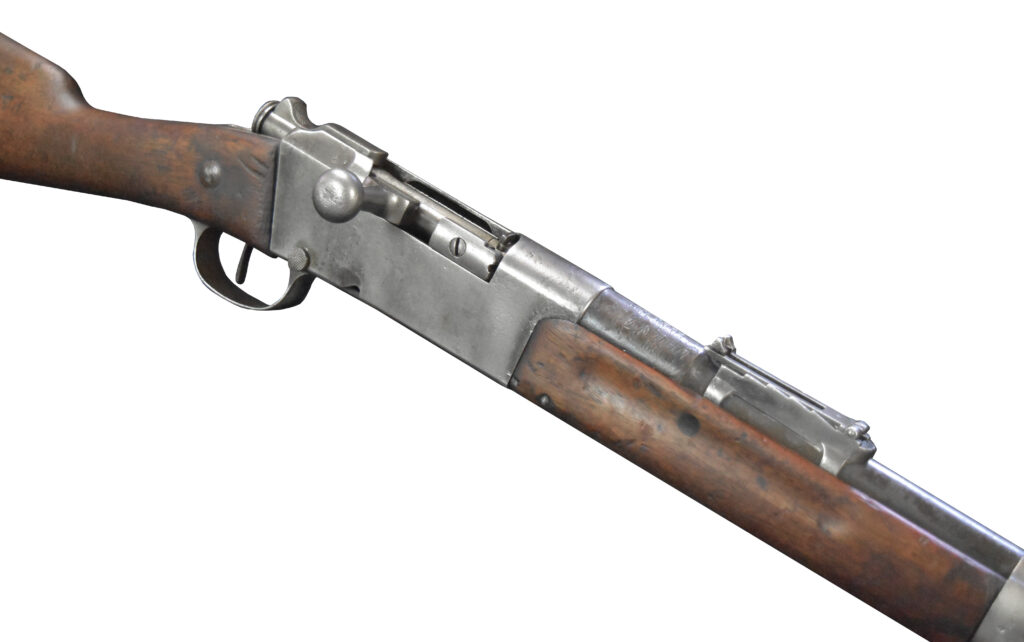
The Lebel Mle 1886 is a French bolt-action service rifle chambered in 8mm Lebel, historically significant as the first military rifle to use smokeless powder. Feeding from an 8-round tube magazine, it revolutionized small arms worldwide and served France through both World Wars.

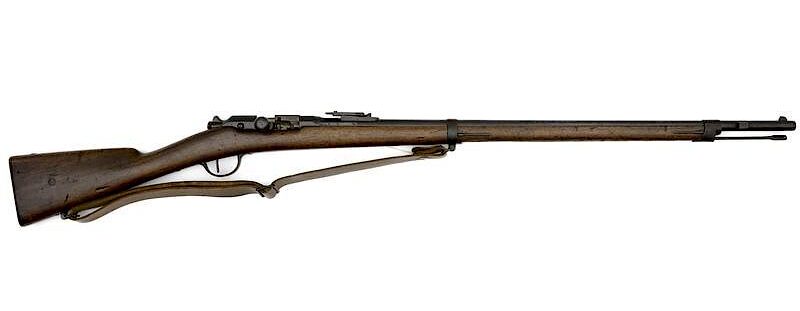
The Fusil Gras Mle 1874 is a French single-shot bolt-action rifle chambered in 11mm Gras, developed by converting the earlier needle-fire Chassepot to fire self-contained metallic cartridges. It served as France’s standard infantry rifle through the late 19th century and appeared in rifle, carbine, and cavalry forms.

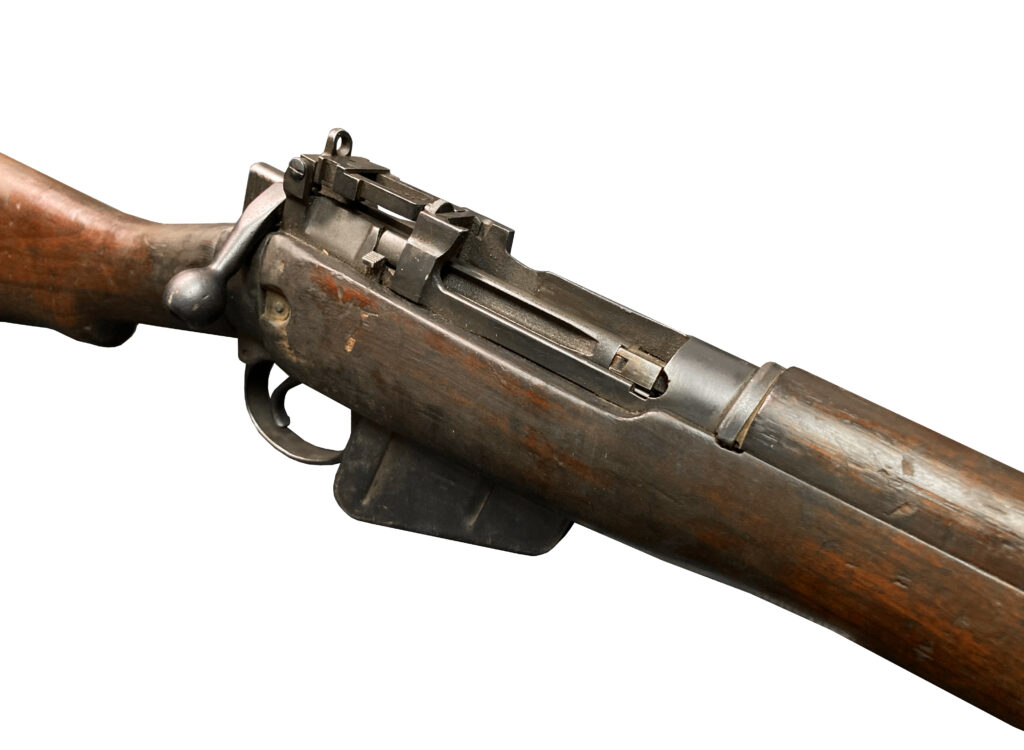
The Lee-Enfield No.4 Mk I is a British bolt-action service rifle chambered in .303 British, adopted in 1941 as a simplified, mass-production successor to the SMLE No.1 Mk III. Stronger, more accurate, and easier to manufacture, it was the standard British and Commonwealth rifle of World War II and served for decades after.

The Lee-Enfield No.1 Mk III (SMLE) is a British bolt-action service rifle chambered in .303 British, adopted in 1907 and used through both World Wars. Known for its fast, smooth cock-on-close action and 10-round magazine, it was produced across Britain, India (Ishapore), and Australia (Lithgow) and remains one of the most collectible military rifles.

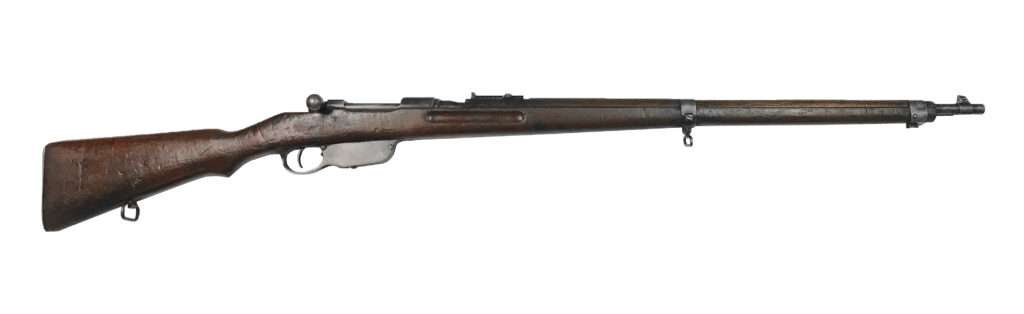
The Steyr M95 is a straight-pull bolt-action service rifle adopted by Austria-Hungary in 1895, chambered originally in 8×50R Mannlicher and later converted to 8×56R. Known for its fast straight-pull action and en-bloc clip feed, it served through both World Wars and remains a popular, affordable milsurp collectible.